
Battery
Retrofitting a Battery to Your Existing Solar
You don't need a new solar system to get storage. Here's how batteries bolt onto existing arrays, what AC coupling means, and how to size the unit to your evenings.
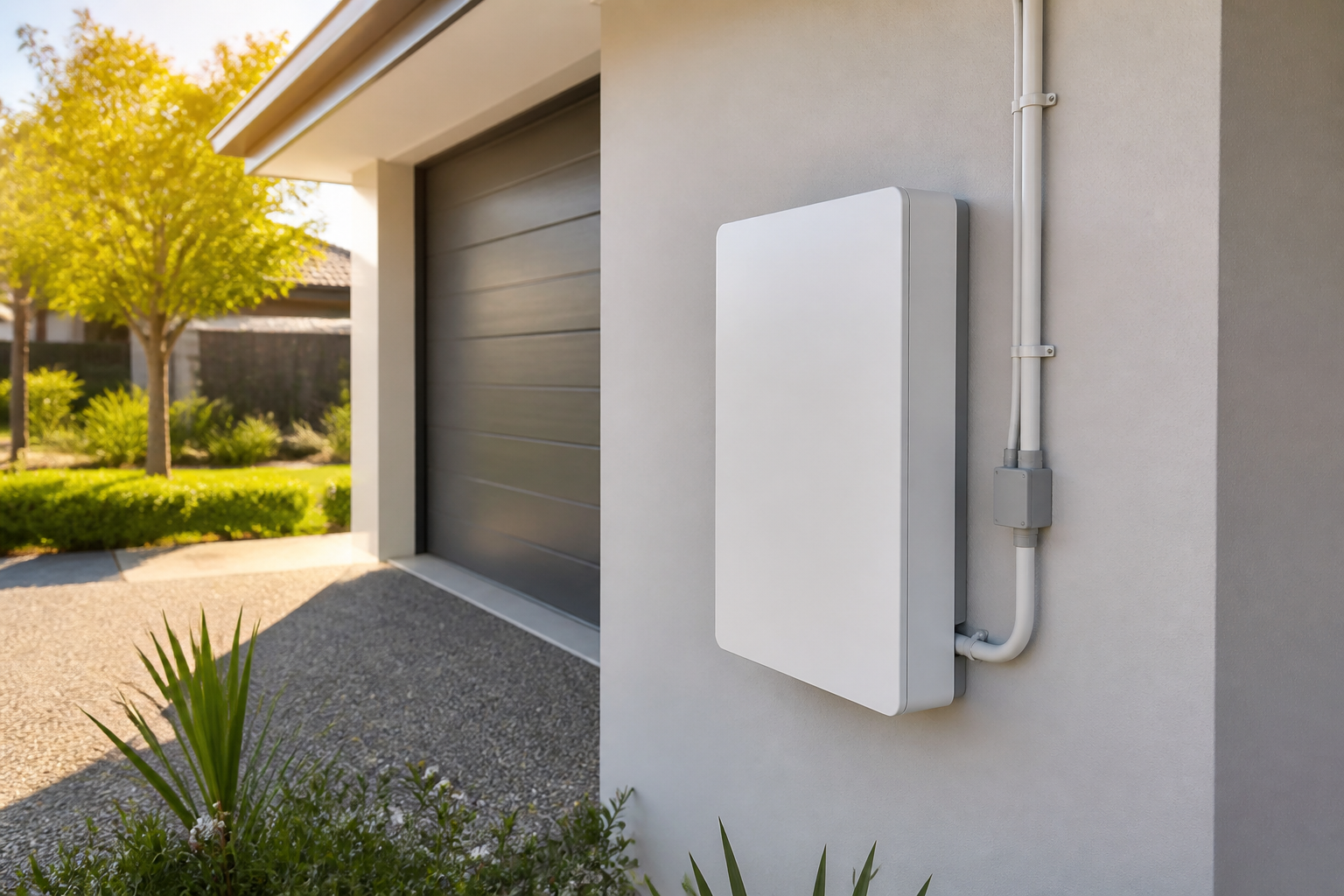
A common myth keeps households from getting storage: the idea that a battery only works with a brand-new solar system. Not true. Almost any existing grid-connected solar system can be retrofitted with a battery, regardless of its age or brand. What varies is how the battery connects — and that choice shapes cost, efficiency and what your system can do in a blackout.
Two ways to connect a battery
The first path is AC coupling. The battery arrives with its own built-in inverter and connects to your switchboard alongside the existing solar system, which keeps running untouched. This is the standard retrofit route: it works with any solar setup, old or new, and installation is straightforward. The second path is DC coupling, where your existing inverter is replaced with a hybrid unit that manages both panels and battery together. It's slightly more efficient and tidier on the wall, but the changeover cost only stacks up if your inverter is nearing retirement anyway. A good assessor will price both and show you the difference rather than defaulting to one.
Sizing: measure your evenings, not your roof
Battery size should be driven by two numbers: how much solar you currently export each day, and how much electricity you buy back between sunset and sunrise. The sweet spot is a battery that fills from your surplus most days and runs close to empty by morning — cycling fully is what earns the money. Your electricity retailer's data or your monitoring app reveals both figures in minutes. For many households that lands between 10 and 15 kWh of usable storage, but the right answer is personal, and oversizing wastes capital just as surely as undersizing wastes sunshine.
What about blackouts?
Backup power is possible but not automatic. If outage protection matters to you, say so at quoting time, because it changes the hardware and the wiring — a backup circuit must be configured to keep essentials like the fridge, lights and internet alive while the grid is down. Some batteries offer whole-home backup, others a single protected circuit, and some entry-level configurations offer none at all.
Practical details worth knowing
Batteries need a suitable location — shaded, ventilated and compliant with clearance rules that keep them away from bedroom windows and habitable-room walls. A garage or a shaded external wall usually works well. Installation typically takes a day, your distributor must approve the connection, and current rebate programs can significantly reduce the upfront cost for eligible homes, subject to approved product lists.
The bottom line: if your solar routinely exports power at midday while you buy it back at peak evening rates, a retrofit battery is the missing half of your system. Start with a bill and a monitoring screenshot, and the sizing maths almost does itself.