
Solar
Replacing an Ageing Inverter: What to Expect
The inverter is the hardest-working part of your solar system and usually the first to retire. Here's how replacement day actually works, and how to choose the new unit well.
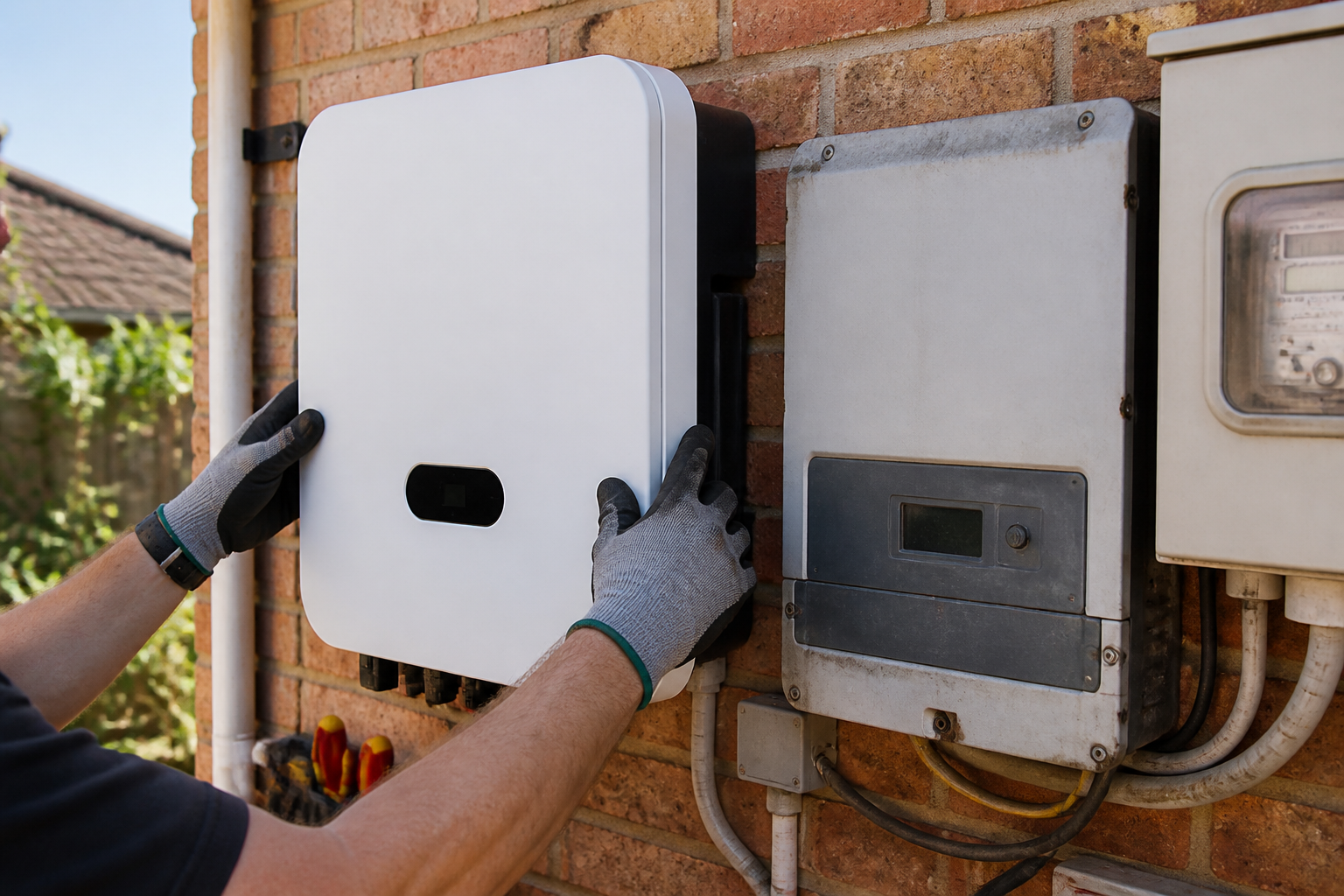
Panels get all the attention, but the inverter does the heavy lifting — converting DC power from the roof into usable AC electricity, all day, every day, through Australian summers. It's also the component with the shortest life. Most units retire somewhere between ten and fifteen years, which means a wave of Australian systems installed in the mid-2010s are reaching changeover time right now. Here's what the process actually involves.
How to know it's time
Some inverters fail outright — a dead screen, a persistent fault code, or repeated tripping that cuts your generation to zero. Others fade politely: output drops on hot afternoons, the unit restarts itself more often, or a humming fan runs constantly. If your inverter is past its tenth birthday and doing any of these things, a repair quote usually isn't worth chasing; parts for discontinued models are scarce, and labour on an out-of-warranty unit rarely makes financial sense.
Choosing the replacement
This is the decision that matters, because a new inverter sets up your system's next decade. Three questions shape it. First, capacity: should the new unit simply match the old array, or leave headroom for extra panels later? Second, battery readiness: a hybrid inverter costs more today but lets you add storage later without another changeover. Third, monitoring: every modern unit includes an app that shows generation in real time — a genuine upgrade if your old system was a black box. Your installer should also confirm the model is approved by your electricity distributor before anything is ordered.
What happens on the day
Replacement is refreshingly quick. The installer isolates the system, removes the old unit, mounts the new one — usually on the same wall, reusing the existing cable runs — then connects, tests and commissions it. Most swaps are finished in two to four hours, and your home keeps its normal grid supply throughout, so the kettle still works. Afterwards, the installer registers the new inverter with your distributor and sets up the monitoring app on your phone before leaving.
The paperwork behind the scenes
A compliant changeover includes a certificate of electrical safety, an updated connection record with your distributor, and warranty registration with the manufacturer — typically ten years or more on current units. Ask for copies of all three. They matter enormously if you sell the house or ever need a warranty claim.
A sensible moment to think bigger
Because the electrician is already on site and the system is already offline, inverter day is the cheapest possible moment to consider adding panels or pre-wiring for a battery. You don't have to do either — but pricing the options while the toolbox is open costs nothing and often changes the decision.