
Solar
Can You Add More Panels to an Existing System?
Sometimes yes, sometimes no — and sometimes it's the wrong question. Here's what decides whether your array can grow, and when replacement beats expansion.
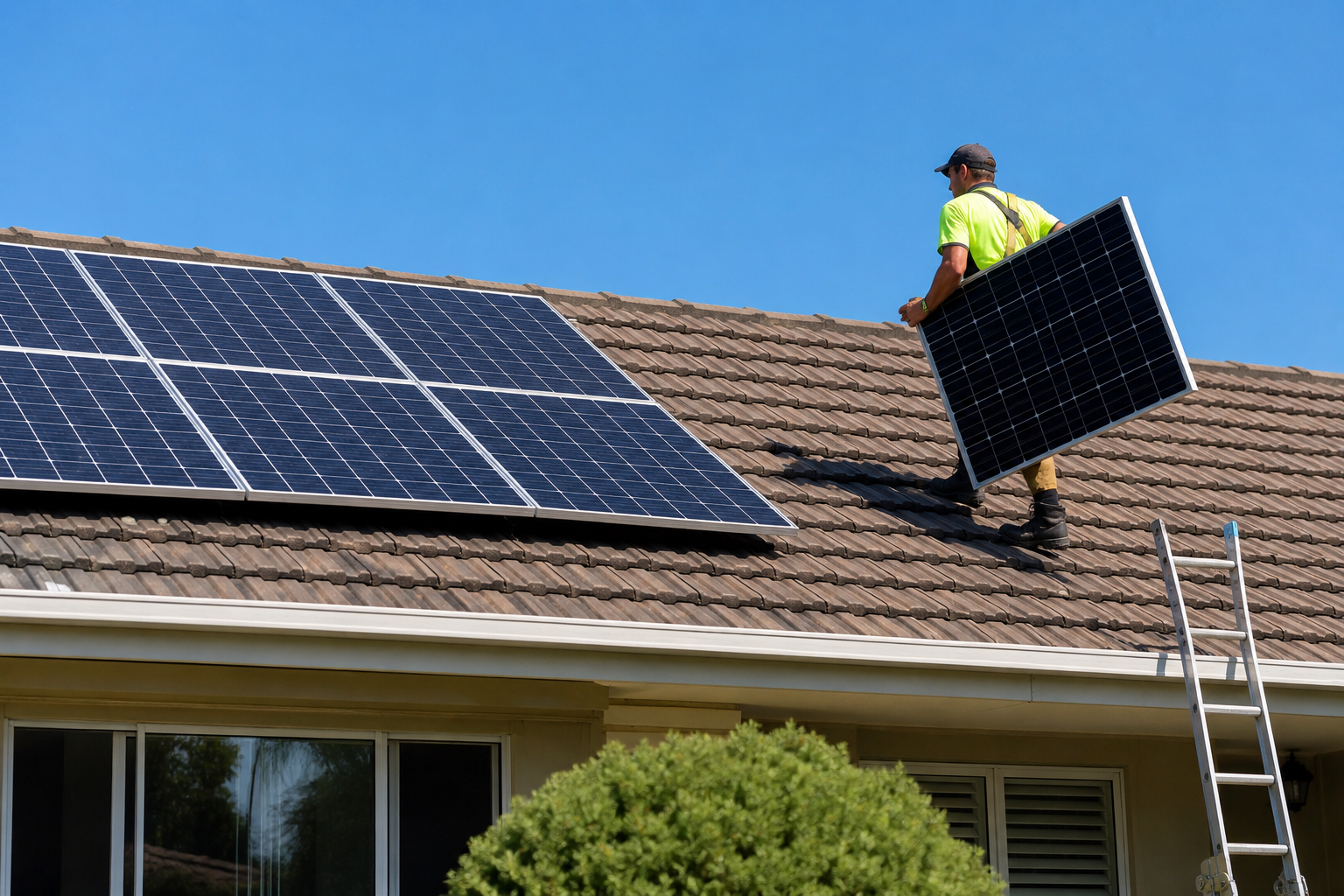
It sounds like the simplest upgrade in the world: your roof has spare space, your bills have grown, so just bolt on a few more panels. Sometimes that is exactly what we do. But whether expansion makes sense depends on four things most homeowners have never had reason to think about — and occasionally the honest answer is that adding to an old system is throwing good money after old hardware.
Your inverter sets the ceiling
Every solar system is built around its inverter, and each inverter has a maximum amount of panel capacity it can accept. Installers often "oversize" the array slightly at install time, which means many systems are already at or near that ceiling. If yours is, adding panels means either a second inverter or a larger replacement one — both perfectly workable, but no longer a cheap bolt-on.
Matching new panels to old ones is harder than it looks
Panels wired together on one string need to be electrically similar, and the models on your roof have almost certainly been discontinued. Mixing mismatched panels on a single string drags every panel down to the weakest performer. The workarounds — a separate string, microinverters or DC optimisers on the new section — all work, but they add cost that has to be weighed against simply starting fresh.
Approvals and standards apply again
Extending a system isn't a private matter between you and your roof. Your electricity distributor caps how much inverter capacity a home can connect, and any modification must bring the installation up to current wiring and mounting standards. On older systems, that sometimes surfaces earthing or isolator work that needs doing anyway — better discovered by design than by inspection.
The rebate maths often favours replacement
Here's the counterintuitive part. Small-scale technology certificates — the upfront federal discount — are paid on new capacity, and a full modern system captures them across every panel installed. Because current panels produce roughly double the output of ten-year-old ones, replacing a tired 3 kW system with a new 10 kW one frequently costs less per kilowatt-hour generated than grafting new sections onto old bones, and it resets every warranty on the roof at the same time.
So what should you do?
Start with data, not hardware. A good assessor will check your inverter's headroom, your export limit, your roof's remaining space and the age of the existing gear, then price both paths side by side. Sometimes a modest extension is the clear winner; sometimes replacement pays for itself in the difference. Either way, you'll be choosing with numbers instead of guesswork — which is exactly how a decade-long asset should be bought.